Moving truck rental equipment often includes the truck, cargo box, ramp, and tie-down points. Blankets, straps, dollies, packing supplies, and labor may cost extra or need separate planning. Before moving day, confirm what comes with the truck, choose the right size, and plan how each item will be loaded safely.
A rental truck can give a household more control over a move. It can also cause trouble when renters think every tool is included. Careful planning helps protect furniture, limit shifting, and make driving safer. This guide can also support your moving checklist for a home, apartment, or business move in Appleton.
Table of Contents
- What equipment does a moving truck rental usually include?
- What moving truck rental equipment do you need to bring?
- Does a rental truck come with moving blankets, straps, or a dolly?
- How should you choose the right truck size for your move?
- How do you load a rental truck so items do not shift?
- What does a rental truck not cover during a move?
- What should you check before returning the rental truck?
- Frequently Asked Questions
What equipment does a moving truck rental usually include?
A rental truck usually includes the vehicle, cargo box, loading ramp, and tie-down points. The exact equipment depends on the truck size, rental company, and pickup location. Appleton Movers can help Appleton households think through the tools needed for a self-managed move.
Which features are typically built into the truck?
Most moving trucks have a cargo area with a rear roll-up door. Many have a ramp, cab seating, and rails or rings for securing loads. Some trucks have a walk-through opening between the cab and cargo box. Others do not.
The cargo floor may be smooth or textured. The truck may also have inside lights, a backup camera, mirrors, and a fuel gauge. These features help, but they do not replace careful loading. Learn how the ramp opens, and check its weight limit before moving heavy items.
What should you confirm before pickup day?
Ask which tools are included and which tools must be rented. Ask if equipment needs to be reserved before pickup. You should also check the inside size, door opening, ramp length, fuel rules, mileage terms, and return process.
Use this short moving checklist before accepting the truck:
- Confirm the truck’s inside length, width, and height.
- Ask if a dolly, blankets, or straps are included.
- Check the ramp and door before accepting the vehicle.
- Review the rental agreement and protection choices.
- Learn where and when the truck must be returned.
What moving truck rental equipment do you need to bring?
Renters usually bring packing supplies, furniture protection, hand tools, and safety items. A truck carries the load, but it does not pack boxes or protect furniture by itself. Planning these supplies before the day of moving makes the work much smoother.
Which packing and protection supplies matter most?
Strong boxes, packing paper, tape, and labels help keep goods organized. Dish packs or small, sturdy boxes work well for plates, bowls, glasses, and other breakables. Wrap each bowl, place it on its side when suitable, and add padding so pieces cannot strike each other.
Furniture pads, plastic wrap, mattress bags, and corner protection help limit scratches and dirt. Do not wrap damp items in plastic. Trapped moisture can cause damage. A simple marker system can show each room and mark fragile boxes without slowing the loading work.
Renters may also need packing help when there are many fragile items or little time. You do not need a professional for simple box packing if you can safely lift, wrap, and label each item. Professional help makes more sense when the load is large, delicate, or hard to organize.
What loading tools make heavy items safer to handle?
Useful tools include a four-wheel dolly, appliance dolly, lifting straps, work gloves, and a strong step stool. Bring closed-toe shoes, water, and basic first-aid supplies. Never carry a heavy item alone when the path is narrow, steep, or uneven.
Furniture sliders help move items across a level floor before they reach the truck. Moving straps can share weight between two people, but they do not remove injury risk. A professional moving labor team may be safer when large appliances, stairs, tight turns, or long carries are involved.
Does a rental truck come with moving blankets, straps, or a dolly?
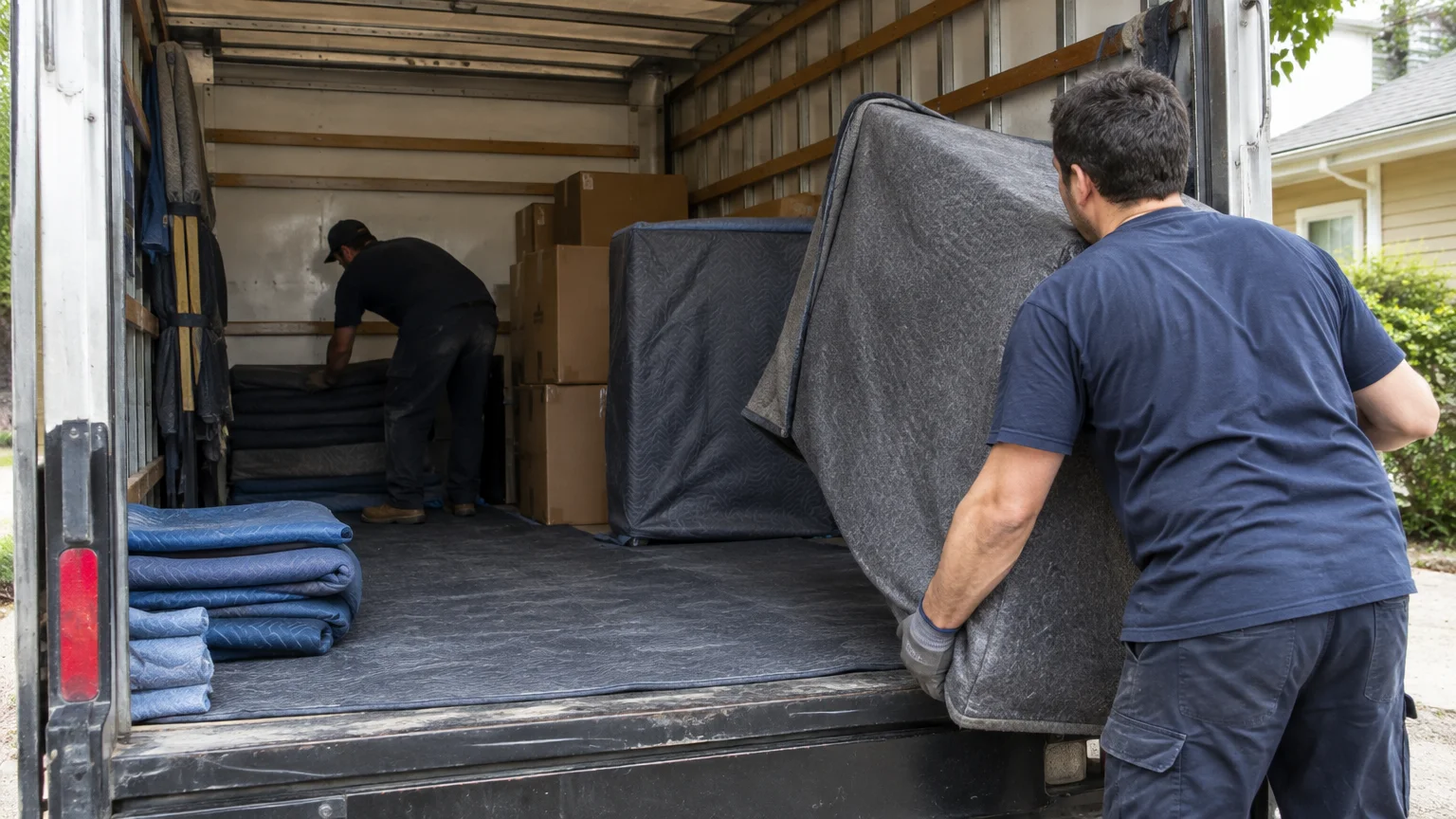
A rental truck may come with some moving blankets, straps, or a dolly. Never assume these items are included. They may be add-ons, or you may need to bring them from home. Check the rental agreement and inspect the truck before loading starts.
How do blankets and straps protect furniture?
Moving blankets cushion wood, glass, painted surfaces, and finished metal. Cover the item fully, and fold the blanket edges away from corners that could catch. Stretch wrap can hold a blanket in place, but do not wrap it so tightly that it harms drawers, doors, or delicate finishes.
Straps help hold furniture against a wall or keep stacked items from moving. Attach them only to approved anchor points. A strap should not press against a sharp edge. Do not use a strap to lift an item unless it was made for that purpose.
When is a hand truck or appliance dolly necessary?
A hand truck works well for stacked boxes and smaller heavy items. An appliance dolly has a taller frame and a strap for large items such as washers, dryers, and refrigerators. The right dolly keeps the load close to the user and reduces awkward lifting.
Dollies still need care. Ramps, curbs, stairs, and wet surfaces can make them hard to control. Two trained people may be needed for a large appliance. When the load feels unstable, professional Loading & Unloading Help can reduce strain and help protect the item and building.
How should you choose the right truck size for your move?
The right truck size depends on furniture, boxes, large items, access, and packing methods. A truck that is too small may lead to unsafe stacking or another trip. A truck that is too large can leave gaps where items move during travel.
What affects the truck space you need?
A home with large sofas, beds, tables, and appliances needs more space than one with mostly boxes. Storage items, office furniture, exercise gear, patio items, and packed wardrobes also take room. A long carry from the home to the truck may affect loading time.
Make a full inventory before choosing a vehicle. Measure unusual items, such as tall bookcases and assembled desks. For an apartment move, stairs, elevators, narrow halls, and parking limits can matter as much as the room count. Apartment Movers can help when the building creates hard access.
How can you avoid an overloaded or poorly packed truck?
Keep the truck within its listed weight limit and cargo height. Put heavy items low and near the front wall. Use lighter items to fill upper spaces. Balance the load from side to side, and make sure no loose item can fall when the door opens.
Do not treat truck size as permission to pack carelessly. A full inventory, firm boxes, and a planned loading order help use space well. If the door will not close safely or the rear axle looks low, check the load before driving. A moving estimate from a professional can also help when you are unsure how much labor or space the move needs.
How do you load a rental truck so items do not shift?
A stable load starts with heavy furniture near the front wall and ends with a firm barrier near the door. Pack items tightly, but do not crush boxes or block tie-down points. After driving a short distance, inspect the load and stop if anything has shifted.
What loading order keeps furniture and boxes stable?
The usual order is heavy furniture first, then appliances, strong boxes, lighter boxes, and soft items. Mattresses and padded furniture can fill gaps, but they should not support very heavy pieces. Protect tables, and secure drawers without pressing on fragile handles.
Follow this simple loading order:
- Protect the truck floor and place pads near the front wall.
- Load the heaviest items low and close to the cab.
- Build even rows from the front toward the rear.
- Fill open spaces with soft, light items.
- Use straps and a final barrier before closing the door.
How should you secure fragile, heavy, and awkward items?
Mark fragile boxes clearly, and keep them away from crushing weight. Glass, mirrors, televisions, and artwork need separate padding and firm support. Heavy boxes should be small enough to lift safely. Never place them on fragile cartons.
Awkward items need extra care. A piano may need a piano board, thick padding, trained movers, and a plan for steps or tight turns. A large safe, stone table, or commercial machine may also be unsafe for casual helpers. Appleton Movers can help Appleton customers decide when a self-loaded truck is not the safest choice.
What does a rental truck not cover during a move?
A rental truck usually does not include packing, loading, unloading, item setup, or move planning. The renter may also handle fuel, cleaning, driving, parking, and return papers. The agreement explains the exact duties, so read it before pickup.
Which packing, loading, driving, and unloading tasks remain yours?
The renter usually supplies or arranges boxes, wrapping, labels, labor, and special tools. The renter must also check doorways, protect floors, manage keys, and make sure the truck can reach both places. A rental truck does not solve access problems at an apartment, office, or storage site.
Driving a large vehicle takes extra care. Wide turns, longer braking distance, overhead clearance, blind spots, and weather all matter. Follow the rental company’s rules, and do not drive while tired or distracted. Commercial & Office Movers or Local Movers may help when a business needs less downtime.
What insurance, damage, and roadside details should you review?
Review the rental company’s protection choices, exclusions, deductibles, and limits. Learn what happens after a crash, theft, mechanical problem, or damage to another person’s property. Personal auto coverage may not work the same way for a rental truck.
The agreement may also explain roadside help, towing, banned cargo, extra drivers, and late returns. Take photos before and after use to record the truck’s condition. Long-distance Movers may be a better fit when the route, load, or delivery plan is too complex for a first-time driver.
What should you check before returning the rental truck?
Before returning the truck, remove all belongings, sweep the cargo area, inspect for damage, and follow the fuel and return rules. A final check helps prevent forgotten items and makes the handoff easier. Keep copies of receipts, inspection notes, and return confirmation.
Which final inspections and documents should you complete?
Walk through the cab and cargo box with a flashlight. Check under seats, inside door pockets, along the walls, and near the ramp. Take clear photos of the truck, fuel gauge, mileage display, and any new marks before leaving.
Confirm that every piece of equipment has been returned. Missing blankets, straps, or dollies may lead to charges under the agreement. A signed or electronic return record can show when and how the truck was handed back.
When can professional moving help make the process easier?
Professional help is useful when the load includes heavy appliances, stairs, narrow halls, fragile items, or limited time. It can also help a tenant avoid injury while still renting and driving the truck. Homeowners and business owners may choose labor only instead of a full-service move.
Appleton Movers serves customers in the main Appleton area, from Erb Park and Old Third Ward to Kaukauna, Neenah, Hortonville, Sherwood, and nearby communities. The team offers moving support suited to the job. Choose help when the truck is ready but the physical work feels unsafe or too large to manage alone.
Frequently Asked Questions
Are moving blankets included with every rental truck?
No. Some rental companies include blankets, while others offer them separately or do not provide them. Confirm the exact equipment before pickup. If blankets are not available, clean furniture pads can help protect finished surfaces during loading and travel.
Does a moving truck rental include loading and unloading labor?
Usually, the rental covers the vehicle and its use, not physical labor. The renter may need to load, secure, drive, unload, and return the truck. Professional moving labor can help with heavy work while the renter keeps control of the vehicle.
What is the best way to pack bowls for moving?
Wrap each bowl in packing paper, add cushioning between pieces, and use a strong box. Keep bowls on their sides when possible instead of placing heavy pressure on one rim. Fill empty spaces so the contents cannot move when the box is lifted.
Can a rental truck carry a piano?
A rental truck may carry a piano only when its size, weight, ramp, and tie-down plan are suitable. A piano needs strong padding, secure tools, and several trained people. Because damage and injury risks are high, professional movers are often safer.
How can renters keep boxes from shifting in transit?
Pack boxes tightly, place heavy items low, and fill gaps with soft goods. Furniture pads and approved straps can add support. The final row should create a firm barrier near the door. Check the load again after driving a short distance.
Key Takeaways
- Confirm every included tool before pickup day.
- Bring boxes, padding, straps, gloves, and suitable dollies.
- Choose truck space from the full inventory, not room count alone.
- Load heavy items low, balance both sides, and secure the final row.
- Review protection, roadside, return, and damage terms before driving.
Conclusion
Renting a truck can work well when you plan the load and bring the right tools. The truck itself is only one part of the move. Blankets, straps, dollies, packing supplies, safe lifting methods, and a clear return plan all matter.
A careful review before pickup helps prevent delays and damaged belongings. For households and businesses, Appleton Movers can provide practical support when loading or unloading becomes too heavy, tight, or risky. Contact us to discuss the moving help your upcoming job needs.