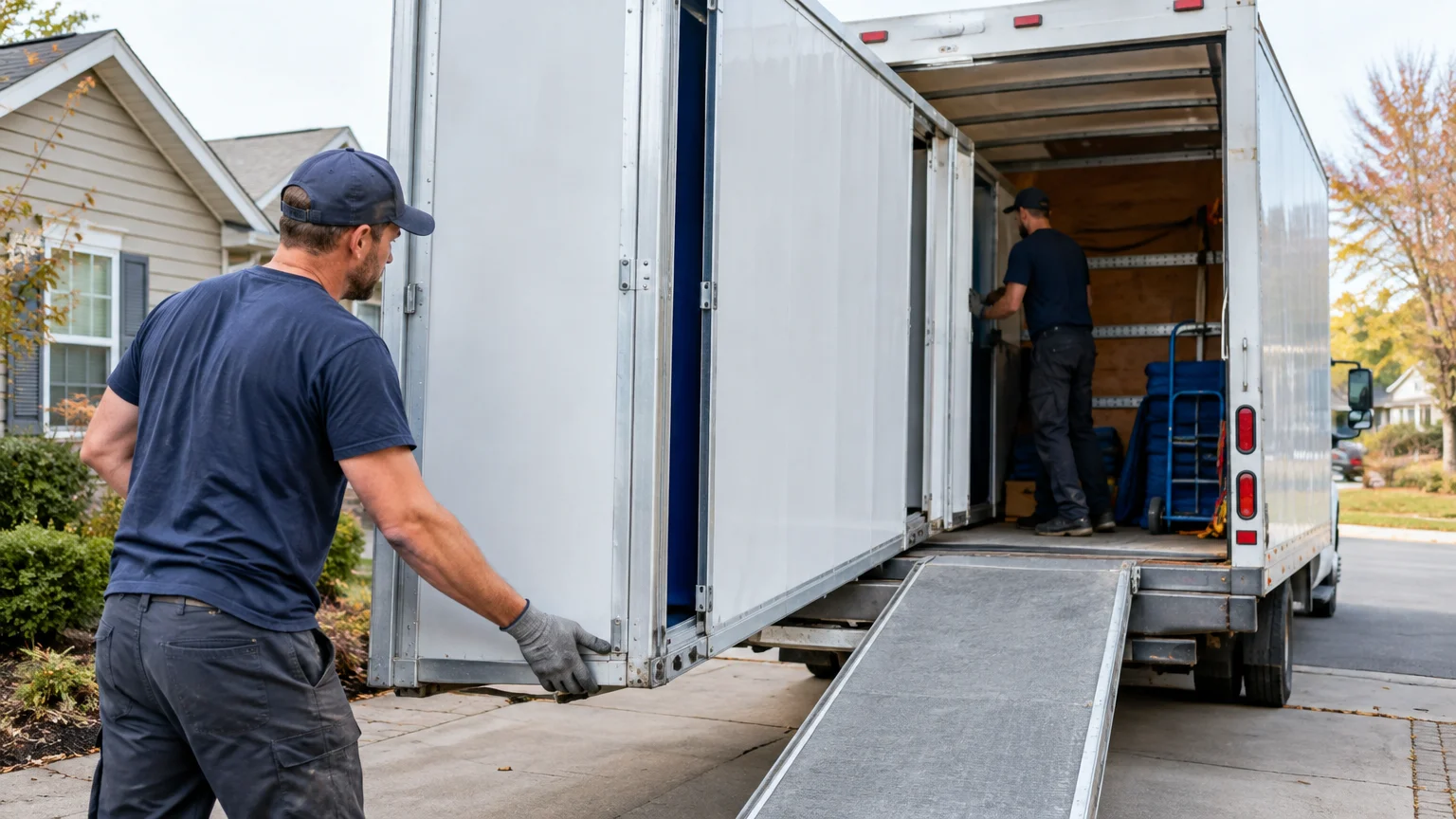
Long distance moving pods give homes and businesses a flexible way to move items between states. A container comes to the property, stays while it is loaded, and then travels to the new address. The right choice depends on space, timing, physical needs, access, and protection terms.
What are long distance moving pods and how do they work?
Long distance moving pods are portable storage containers used for household or office moves. The container arrives at the property and stays there during loading. It then travels to the next location. This gives the customer more control than a standard truck move.
How portable storage containers are delivered, loaded, and transported
The process begins when the container company sets a delivery date. A driver places the container in a safe area, such as a driveway or approved parking space. The customer then loads boxes, furniture, and other items inside. Some people do this work themselves. Others hire Loading & Unloading Help for lifting and safe placement.
Good loading is important. Heavy items should sit low and near the middle. Boxes should fit closely together to limit movement. Furniture needs pads or other protection. Fragile goods should be marked clearly. Keep a written list of valuable items before the container leaves.
After loading, the company collects the container and moves it to the new address. The container may pass through terminals, trucks, or transfer points. Weather, traffic, road conditions, and limited access may change the delivery time. The written agreement should list the expected delivery window and explain what happens if plans change.
When moving pods work well for homes, apartments, and office moves
A pod can work well when a customer needs flexible loading time. It may suit a homeowner who wants to pack over several days. It can also help a business move in stages while items stay in one place. Appleton Movers can help Appleton residents compare container moving with other options.
Space must be checked before ordering. Some neighborhoods limit large containers on public streets. Apartment buildings may need approval. Narrow driveways may also prevent safe placement. Confirm clearance, ground strength, parking rules, and delivery access before scheduling the container.
Are moving pods better than hiring a full-service long distance mover?
Moving pods are not always better than full-service movers. They can suit customers who want control over packing and timing. Full-service movers may fit people who need packing, lifting, transport, and delivery handled by one team.
Comparing self-loading, container moving, and full-service relocation
With a self-loaded container, the customer packs and loads most items. The container company handles transport. It may not pack boxes or move heavy furniture inside the home. This option leaves the loading plan with the customer while reducing some transport work.
A full-service move usually includes a crew that protects furniture, carries items, loads the truck, transports the shipment, and unloads it. Packing Services can help when the customer has fragile items, little time, or a large home. Residential Movers may be a better fit when one team should manage the main move.
The property type also matters. A ground-level home with a clear driveway may suit a container. A high-rise apartment with strict loading rules may be easier with a scheduled crew. An office move may need planning around desks, equipment, records, and business hours.
Which option fits your timeline, physical ability, and moving needs?
A container may fit someone who can pack slowly and wait for a planned delivery window. It may not fit someone who needs all belongings moved on one fixed day. Think about stairs, heavy appliances, long walking paths, and the risk of injury.
You do not always need a professional for simple packing tasks. You can label boxes, sort unwanted items, wrap small goods, and clean empty rooms yourself. Professional help is wise for heavy lifting, large furniture, fragile objects, tight stairways, or work that may cause an injury.
Compare the full plan, not just the transport method. A moving estimate should explain what the company will do, when the container will arrive, who loads it, and how delivery is arranged. Appleton Movers can help homeowners and business owners choose a service that fits the move.
Who arranges a long distance moving pod: a broker or a carrier?
A moving broker arranges moving services but may not transport the shipment. A carrier owns or operates the equipment and performs the move. Some businesses provide both services. Others use separate companies for sales, scheduling, storage, and transport.
What a moving broker does before the move
A broker often speaks with the customer first. The broker may collect move details, discuss dates, gather an inventory, and arrange service with a carrier. The broker may also compare available options. However, the broker may not control the truck, container, crew, or final delivery.
Ask for the legal business name of every company involved. Also ask who will deliver the container, who will collect it, and who handles claims if an item is damaged. Clear answers help prevent confusion when the sales contact and moving crew are different businesses.
A broker is not the same as a carrier. Read the agreement closely. Check the names, duties, and contact process. Questions about a moving broker matter during interstate moves because several companies may share responsibility.
What the carrier handles during pickup, transport, and delivery
The carrier usually manages the physical movement of the container. This may include delivery at the starting point, pickup after loading, transport, and placement at the destination. The carrier should explain access rules, delivery windows, storage choices, and what happens if the driver cannot reach the property.
Take photos when the empty container arrives and again after loading. Record visible damage, keep copies of the inventory, and save signed paperwork. These steps make it easier to explain what happened if a claim becomes necessary.
Local Movers may help with loading or unloading. That does not make them the long distance carrier. Confirm each company’s role before signing. Appleton Movers can help customers understand which team handles each part of the move.
How much do long distance moving pods cost and what protection applies?
The cost of long distance moving pods depends on container size, travel distance, storage time, delivery access, loading help, season, and selected services. A final cost is confirmed in the quote and agreement. Compare the complete service instead of one advertised feature.
What affects the total cost of a container move
The amount of space needed is one major factor. A small apartment and a large house may need different container sizes. Some moves may need more than one container. The route and time between pickup and delivery also matter. Extra handling, storage, hard access, stairs, and special items may change the total.
Ask whether the quote includes delivery, pickup, transport, storage, loading, unloading, and basic protection materials. Ask what happens if the move date changes or the container cannot be placed at the address. A written moving estimate should explain these details in plain language.
Moving a piano or another large specialty item may need separate planning. Ask who will handle it and whether a specialty crew is needed. Pianos are heavy, delicate, and hard to move safely over long distances or through narrow entrances.
Questions to ask about liability coverage, damage claims, and delivery terms
Moving insurance is a common phrase, but it can mean different types of protection. A moving company’s liability coverage is not the same as a personal insurance policy. Ask what protection applies, what limits exist, which items are excluded, and how a claim must be filed.
Full value protection moving insurance is a term for broader shipment protection. The exact terms depend on the provider and agreement. Read the written coverage details instead of relying on a sales summary. Ask how damaged items are checked, repaired, replaced, or valued.
Key questions include:
- Who is responsible for damage while the container is at the property?
- Who handles a claim during transport or storage?
- What delivery window appears in the written agreement?
- Are fragile, high-value, or self-packed items treated differently?
- What records, photos, and deadlines are needed for a claim?
Frequently Asked Questions
Where should a moving container be placed?
A container should sit on a firm, level area with room for delivery equipment. A driveway often works best. Local rules, apartment policies, overhead wires, trees, and street access must be checked first. Confirm approval before scheduling delivery, especially when public parking may be used.
Are long distance moving pods good for apartment moves?
They can work for an apartment when the building allows delivery and has a safe loading area. Check elevator rules, loading hours, parking limits, and container clearance. For upper-floor units or tight downtown spaces, a moving crew may be easier than loading a container by hand.
Do customers load moving pods themselves?
Usually, the customer can load the container or hire help for that task. Loading alone may suit people with time, strength, and simple household goods. Professional help is safer for heavy furniture, appliances, stairs, and fragile items. The agreement should state who loads, secures, and unloads the shipment.
Is a moving broker the same as a moving company?
No. A broker arranges moving services, while a carrier performs the physical transport. Some businesses handle both roles, but customers should confirm this in writing. Ask for the carrier’s name, claims process, delivery terms, and each company’s duty before signing.
Key takeaways
- Long distance moving pods work best when loading time and space are available.
- Check driveway access, street rules, apartment policies, and delivery clearance first.
- Compare self-loading, container moving, and full-service moving needs.
- Confirm whether a broker, carrier, or both companies handle the move.
- Read the quote, delivery terms, and protection details before signing.
Conclusion: Are long distance moving pods the right choice?
Long distance moving pods can suit customers who want flexible loading and a clear container plan. They may work well for homes, apartments, and offices in Appleton with enough space and time. Full-service movers may be better when the customer needs packing, lifting, or fixed-date planning.
The safest choice comes from checking access, delivery terms, carrier roles, loading needs, and protection details. A written quote should explain what is included and how the final cost is confirmed. Appleton Movers can help with a moving plan for your property, schedule, and shipment needs. Contact us to discuss your move.